
Introduction
In the modern digital world, attracting visitors to a website is only the first step toward business
growth. Many people visit a website, explore its products or services, and leave without making
a purchase.This does not necessarily indicate that they have lost interest in the product or
service.At times, customers require additional time to evaluate different choices before deciding
which option best suits their needs. **Google Remarketing** helps businesses reconnect with
these visitors by showing them relevant advertisements while they browse other websites, use
apps, or watch videos on YouTube.
This advertising strategy allows businesses to remind potential customers about their products
and encourage them to return. In this guide, we will explore how Google remarketing works, its
benefits, different types, and ways to create successful campaigns.
What Is Google Remarketing?
Google remarketing is a digital advertising technique that allows businesses to display targeted
advertisements to people who have previously interacted with their website, app, or other online
content. It uses audience information collected through approved tracking methods to help
advertisers reach interested users again.
For example, imagine someone visits an online clothing store and looks at a particular shirt but
leaves without purchasing it. Later, that person might see an advertisement for the same store
while watching YouTube or browsing another website. This reminder may encourage the visitor
to return and complete the purchase.
Google remarketing is useful for online shops, service providers, educational institutions, travel
companies, and many other businesses. It helps maintain brand awareness and gives potential
customers another opportunity to engage with a business.
How Does Google Remarketing Work?
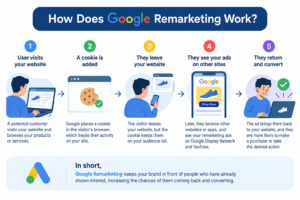
Google remarketing works by identifying eligible audiences based on their previous interactions
with a business. Advertisers can then create campaigns designed to reach those audiences
through supported Google advertising channels.
The process generally involves the following steps:
1. Adding a Tracking Tag
Businesses can install the Google tag or configure an appropriate Google Analytics connection
to collect relevant website interaction data. The setup depends on the advertising campaign and
the information the business wants to measure.
2. Building Audience Lists
Visitors may be grouped according to their activities. For example, a business could create
separate audiences for people who visited a product page, explored a service, or added an item
to their shopping cart.
3. Creating Advertisements
Advertisers design suitable advertisements using text, images, videos, or product information.
The message should match the interests and previous actions of the intended audience.
4. Showing Relevant Ads
Google Ads can deliver advertisements to eligible audience members across supported
advertising placements, subject to campaign settings, platform requirements, and user privacy
choices.
5. Measuring Campaign Results
Businesses can review impressions, clicks, conversions, and advertising costs to understand
campaign performance. These insights help them improve their marketing decisions.
Types of Google Remarketing
Google remarketing includes several approaches that businesses can choose according to their
advertising goals.
### 1. Standard Remarketing
Standard remarketing displays advertisements to previous website visitors as they browse
participating websites and apps within the Google Display Network. It is useful for reminding
people about a brand after their first interaction.
For example, a digital marketing agency could show advertisements to visitors who previously
explored its SEO services page.
### 2. Dynamic Remarketing
Dynamic remarketing displays advertisements featuring products or services that users
previously viewed. It can help businesses deliver more personalised advertising experiences.
For example, an online electronics store may show a visitor an advertisement featuring a
smartphone they previously explored. This approach is especially useful for businesses with
large product catalogues.
3. Video Remarketing
Video remarketing helps advertisers reach eligible audiences through YouTube and other
supported video advertising placements. Businesses can use this strategy to reconnect with
people who have interacted with their videos, channel, website, or other eligible content.
It can be valuable for brands that use video content to explain products, share tutorials, or
demonstrate services.
### 4. Customer List Remarketing
Customer Match allows eligible advertisers to use permitted customer information, such as
email addresses, to reach matching audiences on supported Google platforms. Businesses
must follow Google’s eligibility requirements, data policies, and applicable privacy laws.
This approach can help brands reconnect with existing customers or reach relevant audience
segments.
## Benefits of Google Remarketing
Google remarketing offers several advantages when it is planned and managed correctly.
### Improves Brand Recognition
People often need multiple interactions with a brand before they feel ready to make a purchase.
Remarketing helps businesses remain visible to previous visitors and makes it easier for
potential customers to remember their products or services.
Encourages More Conversions

Some visitors leave a website before completing an important action, such as purchasing a
product or submitting an enquiry. Remarketing advertisements can encourage eligible visitors to
return and finish the process.
### Supports Audience Targeting
Businesses can create different audience groups based on browsing behaviour and other
permitted signals. This makes it possible to develop advertisements that are more relevant to
particular stages of the customer journey.
Helps Use Advertising Budgets Effectively
Remarketing focuses on reaching people who have already shown some interest in a business.
Although results are not guaranteed, this approach can help advertisers direct part of their
budget toward audiences who may be more familiar with their offerings.
### Provides Measurable Results
Google Ads reporting allows businesses to monitor campaign performance and compare
different advertisements. Marketers can use this information to identify successful strategies and
adjust campaigns when necessary.
## Best Practices for a Successful Google Remarketing Campaign
A successful Google remarketing campaign requires more than simply displaying
advertisements to previous visitors. Businesses should focus on relevance, timing, privacy, and
performance.
**Segment Your Audience:** Create separate audience groups for different visitor activities.
Someone who viewed a product may need different messaging from someone who abandoned
a shopping cart.
Create Eye-Catching Ads: Develop visually appealing advertisements using quality graphics,
simple messaging, and a clear call to action that encourages users to engage.Ensure that the
advertisementcommunicates a genuine benefit.
**Set Appropriate Frequency Limits:**Showing the same advertisement too often mayfrustrate
users. Where available, use frequency controls and regularly review campaign delivery.
**Create Relevant Landing Pages:** When users click an advertisement, direct them to a page
that matches its message. A relevant landing page makes it easier for visitors to find the
information they expect.
**Monitor Campaign Performance:** Regularly review click-through rates, conversions, cost per
conversion, and other relevant metrics. Use the results to improve targeting and advertising
content.
**Respect User Privacy:** Follow Google’s advertising policies and applicable data protection
requirements. Provide appropriate privacy notices, obtain consent where required, and honour
user choices regarding tracking and personalised advertising.
Common Mistakes to Avoid
Businesses can reduce campaign effectiveness by making a few common mistakes. Targeting
every website visitor with the same advertisement may produce irrelevant experiences. Ignoring
mobile users can also create problems if advertisements or landing pages do not display
properly on smaller screens.
Another mistake is focusing only on clicks instead of meaningful business outcomes. A
campaign may attract many visitors without generating sales or enquiries. Therefore, advertisers
should define clear goals before launching their campaigns.
Businesses should also avoid collecting or using personal information without an appropriate
legal basis or required consent. A responsible approach to data helps protect users and
supports sustainable digital marketing practices.
Conclusion
Google remarketing is a valuable digital marketing strategy that helps businesses reconnect
with people who have previously shown interest in their websites, products, or services. By
using suitable audience lists, relevant advertisements, and performance tracking, marketers can
encourage repeat visits and create more opportunities for conversions.
However, good results depend on careful planning, appropriate targeting, engaging content, and
responsible data practices. Businesses should continuously evaluate their campaigns and make
improvements based on actual performance.
When used as part of a broader digital marketing strategy, Google remarketing can support
brand awareness, customer engagement, and long-term business growth.
author:Abhinavhttps://itsabhinav.online/